

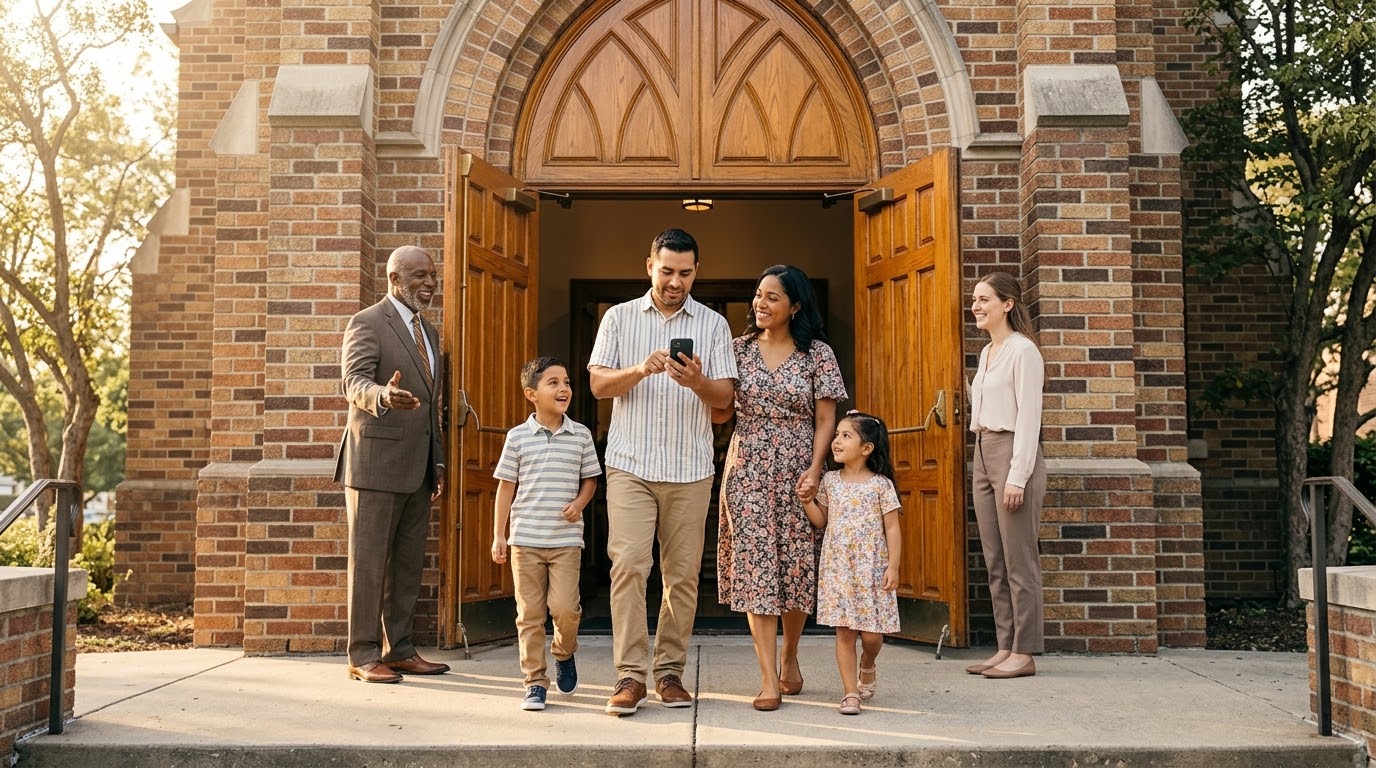
Church websites tend to try to be everything. Sermon archive, photo gallery, ministry directory, calendar, newsletter, blog, staff bios, mission statement, three years of bulletins.
Then a visitor lands on it at 9pm on a Saturday with one question, what time is service, and where, and cannot find the answer.
The one job
For most churches, the website’s real job is helping a stranger decide to walk in on Sunday. Everything else is secondary, and a lot of it belongs in email or an app rather than on the site at all.
Which means four things need to be findable in about five seconds:
- Service times. On the homepage, in plain text, above the fold. Not in a PDF, not only on a calendar widget.
- The address, linked to maps. With a note about parking if parking is confusing, because it usually is.
- What to expect. How long is service. How do people dress. Is there childcare. Where does a first-timer go when they walk in. This is the single most-read page on a well-built church site and most churches do not have one.
- A way to give. Working on a phone, taking two taps, not requiring an account.
What tends to get in the way
A rotating slider of announcements aimed at people who already attend. A homepage headline that is a Bible verse rather than the name of the church and the city it is in. Sermon audio that will not play on an iPhone. A “plan your visit” form that asks for a mailing address.
None of this comes from bad intentions. It comes from the site being built for the congregation instead of the visitor, because the congregation is who asked for it.
The members still matter
They just need different things, and mostly not on the homepage. Ministry sign-ups, volunteer scheduling, the events calendar, the newsletter archive, small group information, that is all real and it all belongs on the site. One level down.
Give the visitor the front door. Give the members the hallway.
Practical next step
Open your site on your phone. Not your desktop, your phone, the way a visitor would. Start a timer. See how long it takes to find Sunday’s service time.
If it is over ten seconds, that is the whole project. It is usually a one-day fix, not a rebuild.
We build and run sites for churches through Jet Faith Design, and online giving and an events calendar come with every plan, with a member directory, year-end giving statements and newsletter tools added on Core, rather than bolted on as four separate subscriptions. But the phone test costs nothing, and you can run it tonight.